

Boat headliners and hull linings: carpet, foam-backed vinyl or vinyl
The cabin headliner and the hull linings are the first thing you see on going below and the last thing anyone thinks about, until they sag or start to look tired. There are three usual materials, carpet-type liner, foam-backed vinyl and plain marine vinyl, and each wants fitting in its own way. This is what Sailrite and Marine Fabricator, the trade magazine for marine canvas and upholstery, say about them.
By Royal Stitch · Published
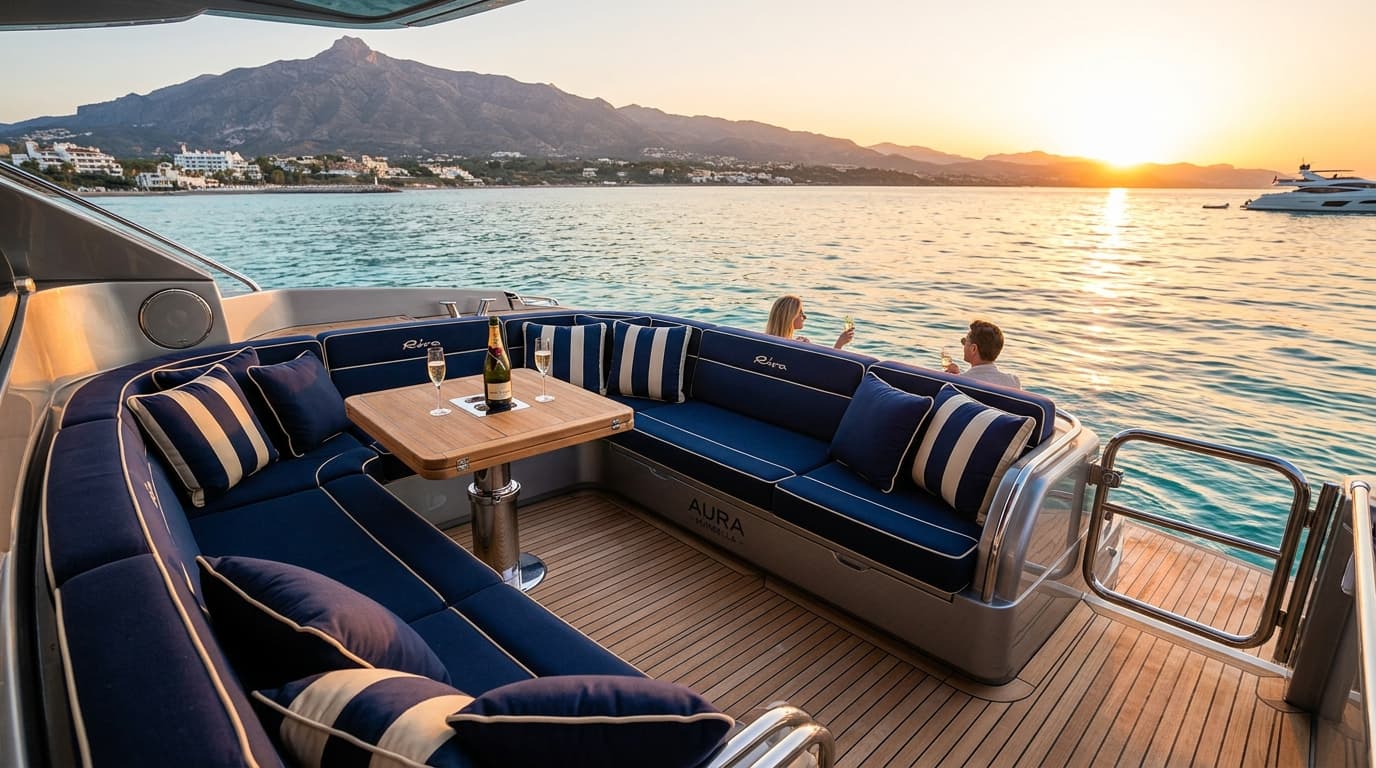 Illustrative image
Why it matters
Marine Fabricator puts it simply: wall panels and headliners are what make the statement as you enter a yacht’s saloon, and they can’t be overlooked once they start to sag and age. Beyond the look, they bring acoustic calm to the interior.
Sailrite, an American supplier of marine upholstery materials, adds light to the list: there isn’t much natural light in a cabin, and swapping a dingy, worn headliner for a new one makes it brighter and makes the space feel larger.
Carpet-type liner
This is a carpet-like fabric made for boats and vehicles. According to Sailrite it resists stains, mould and mildew, cuts without fraying and is the most forgiving material to fit: pieces can be butted together without obvious seams, and bumps in the glassfibre disappear beneath it.
It is also the most shape-conforming, stretching and gathering round curves and bends. That is why Sailrite recommends it for a shapely hull, and Marine Fabricator notes that it works especially well on smaller boats.
Foam-backed vinyl
This is marine vinyl with foam bonded to the back. The foam adds a little cushion, hides small imperfections in the hull, walls or deckhead, and can be cut away round nuts and bolt heads. It comes plain or perforated and wipes clean.
Its weak point is the edge: the foam leaves a visible line, so the seams must be covered. That, say Sailrite and Marine Fabricator, is why it suits places where the joins sit under trim or where the material is wrapped round the edges of a panel.
Irregularities
In the glassfibre, which the foam hides.
Foam-backed vinyl
Forgives small flaws, not its own edges.
The trim
Covers the seam, where the foam would show.
Plain marine vinyl
Upholstery vinyl can serve as a liner too, but it forgives nothing: whatever is underneath shows through. Sailrite recommends it for wrapping panels, where the material turns over the edges, and sees one clear advantage: a far wider choice of colours. It can even be used as an accent alongside foam-backed vinyl.
Where it is glued straight to the hull, Marine Fabricator warns that it is a one-shot job, with spray adhesive and no bubbles or gaps, and advises planning the layout on paper first to keep the seams to a minimum.
What the material needs
Marine Fabricator asks you to check the maker’s figures for strength, abrasion and cleaning, and to choose materials with a topcoat that protects against bacteria and fungus, which the magazine calls extremely important aboard. A pliable vinyl with the look and feel of leather is, it says, always a good choice for headliners and wall panels.
Nor does it all have to be one material. Sailrite describes one of its own project boats with carpet on the main cabin deckhead and foam-backed vinyl in the aft cabin: each space with what suits it.
On a yacht that charters
On a commercial yacht the deckhead isn’t chosen on looks alone. The Red Ensign Group Yacht Code, followed by the British registry and those of its territories, requires that on vessels of 500 GT and over all linings, grounds and ceilings be of non-combustible materials, except in spaces protected by an automatic sprinkler system and a fully addressable fire detection system.
On the smaller yachts that come under the code, the fire requirement falls mainly on the upholstery: fabric-and-padding composites must be approved to Part 8 of the IMO’s Fire Test Procedures Code, or an equivalent. Before choosing the lining for a boat that charters, the first step is knowing which code applies and what certificates the material carries.
What to decide before ordering
With these answered, the lining is chosen for where it goes:
- The surface
- Removable panels, or straight onto the hull? Flat, or full of curves?
- Seams
- Where do the joins fall, and what covers them?
- Material
- Carpet liner, foam-backed vinyl or vinyl? Plain or perforated?
- The vinyl
- Does it carry protection against bacteria and fungus? How is it cleaned?
- The whole
- Does it sit well with the saloon and cabin upholstery?
- The code
- If she charters, which code applies, and what does it ask of the deckhead?
The service
A cabin with a tired headliner?
Interior linings, cushions and seating for boats on the Costa del Sol, patterned on each piece. The service page explains how the work is done.
Sources
Each material comes from Sailrite’s guide to choosing headliner and from two Marine Fabricator articles, the magazine of the American technical textiles association; the fire requirements, from Part A of the Red Ensign Group Yacht Code, July 2024 edition. Each source was opened and read on the publisher’s own site.