

Restoring a classic car interior: what to keep and what to replace
In a classic, the interior matters as much as the engine: the grain of the hide, the pattern of the pleats, the colour of the thread. Restoring it isn’t about making it new. It is about deciding, piece by piece, what is kept, what is replaced and how. This is what the international federation for historic vehicles and Spanish law have to say, and what is worth agreeing before anything comes apart.
By Royal Stitch · Published
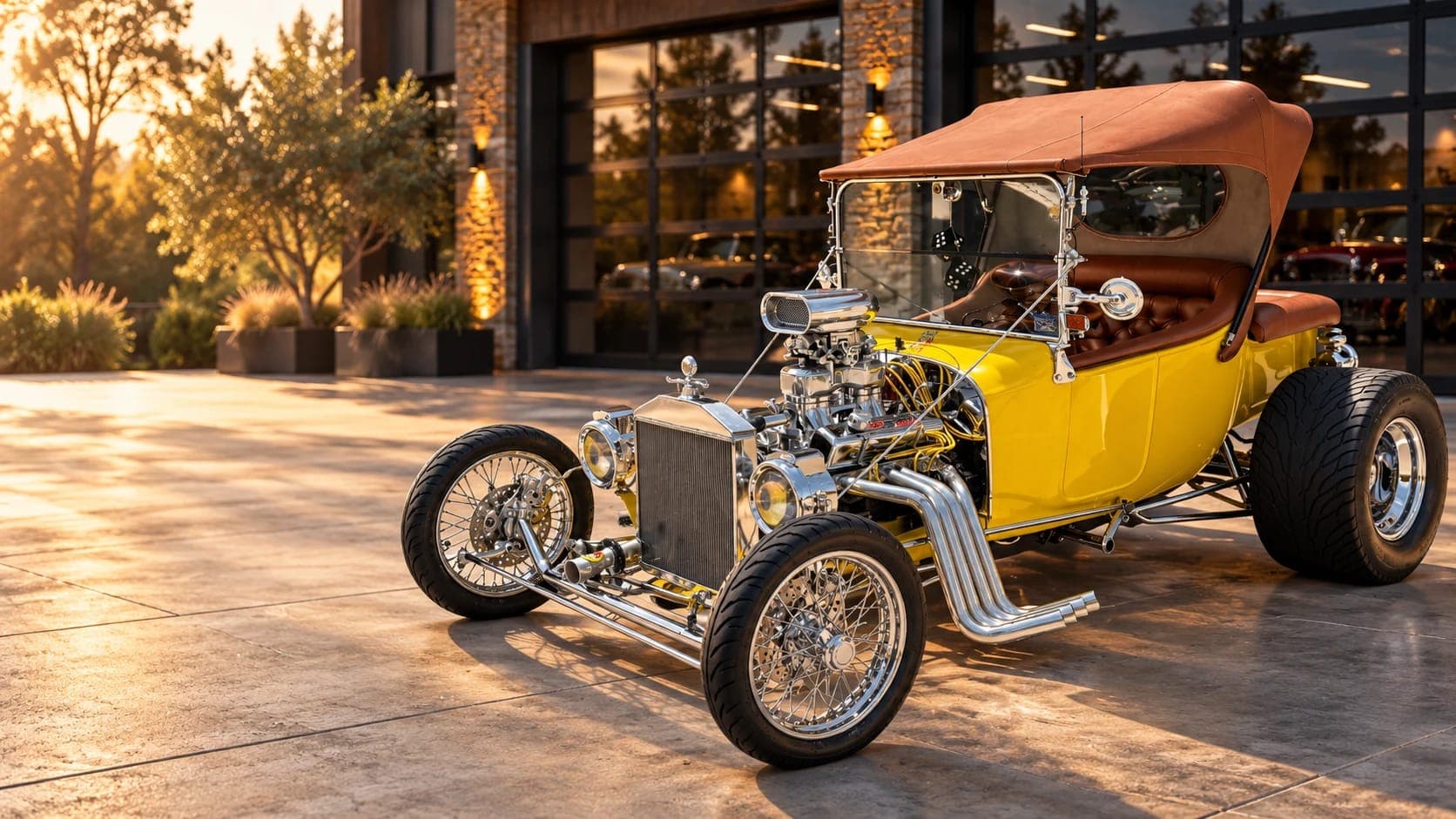 Illustrative image
Conserve, restore, replace: three different things
FIVA, the international federation of historic vehicle clubs, sets out in its Charter of Turin the principles for using, maintaining, conserving, restoring and repairing a historic vehicle. It draws on UNESCO’s Venice Charter — the one that guides the restoration of monuments — and starts from a simple idea: original substance, once lost, cannot be regained.
So it tells the kinds of work apart. Conservation secures and stabilises what is there without altering its historic parts or materials. Restoration and repair do change something, and for those the Charter prefers historically accurate materials and techniques, unless safety, availability or the law rule them out.
The same Charter is clear that a car need not be returned to exactly how it looked when it left the factory. And taking it back to the look of a particular period should only follow a careful study of the historical evidence.
Before it comes apart: record it
Nothing removed from an original seat goes back quite as it was. So before the first staple comes out, it is worth recording exactly what is there: photographs of every piece, the stitch pattern and pitch, the layout of the pleats or perforation, the colour and grain of the hide, the type of piping.
The Charter of Turin asks for the work to rest on the car’s own history and on authentic documents, and whatever is recorded before dismantling becomes part of that history. FIVA also issues an identity card for historic vehicles, always after a physical inspection, and is careful to say the card is no guarantee of authenticity.
Recorded
Photographs and notes of every piece before anything comes apart.
Kept
Whatever is sound stays, even if it isn’t perfect.
Replaced like for like
In period materials and methods, with a mark that sets it apart.
Kept with the car
Original parts that come out stay as a reference.
What is sound, stays
If conservation is the work that removes the least historic material, then whatever still does its job stays, even if it isn’t perfect. In an interior that might be the seat frame, the springs, the door cards, or the hide itself when it is whole and only needs cleaning. Wear is part of the car’s story. A tear is not.
The decision is made piece by piece, not for the interior as a whole. A single seat will often have a hide worth keeping over a filling that no longer holds its shape — and what happens to the filling needn’t decide what happens to the hide.
What is replaced, and how
Whatever no longer does its job is replaced: a filling that has crumbled, a hide split by the sun, a seam coming apart. The Charter of Turin then asks for two things. That the new material is true to the period, in material and in method, wherever possible. And that it carries a simple, permanent mark setting it apart from the historic substance.
In a vintage car, like for like means exactly that. Heritage Crafts, the UK body that champions traditional crafts, lists coach trimming as endangered. The trade began in horse-drawn carriages and followed the carriage when it gained a motor, and its methods are not those of a modern interior: fluting and stuffed fluting, deep buttoning, cotton wadding rather than foam, tacks and gimp pins rather than glue and staples.
Nor is what comes out thrown away. The Charter recommends keeping important original parts with the car, as a record of what they were and how they were made.
In Spain: what the law says
Spain’s Historic Vehicles Regulation, approved by Royal Decree 892/2024, requires at least thirty years since manufacture or first registration for a vehicle to be classed as historic. It also states that alterations compromising a historic vehicle’s originality, or substantially changing how it looks, will not be accepted.
A retrim that changes the character of the interior may run up against that; one that takes it back to its original specification runs the other way. If the car is registered as historic in Spain, or is about to be, it is worth bearing in mind before the materials are chosen.
What to agree before work starts
Before anyone takes anything apart, these questions make the job clear on both sides:
- The brief
- Is the aim the interior exactly as it left the factory, the look of a particular period, or one true to the original without being so to the millimetre?
- The record
- Is every piece photographed and noted before it is removed?
- What stays
- Which parts are sound and can be kept, even if they aren’t perfect?
- What is replaced
- In which material, and by which method? Is it marked as new?
- What comes out
- Is it handed back to the owner, to be kept with the car?
The service
A classic worth doing properly?
Complete interiors in leather and Alcantara for sports and classic cars, and the trim side of a restoration for classic specialists. The service page explains how the work is done.
Sources
The principles of conservation and restoration come from FIVA’s Charter of Turin; the craft, from Heritage Crafts; Spanish law, from the BOE, Spain’s official gazette. Each source was found by searching the publisher’s own site.