

The seat bolster: why it wears first and how it is repaired
In nearly every car with some years on it, the driver’s seat ages unevenly: the centre is fine, while the outer bolster — the one by the door — is worn, cracked or split. That is no accident, and not necessarily poor quality. Why it happens, when restoring the colour is enough, and when the panel has to be replaced.
By Royal Stitch · Published
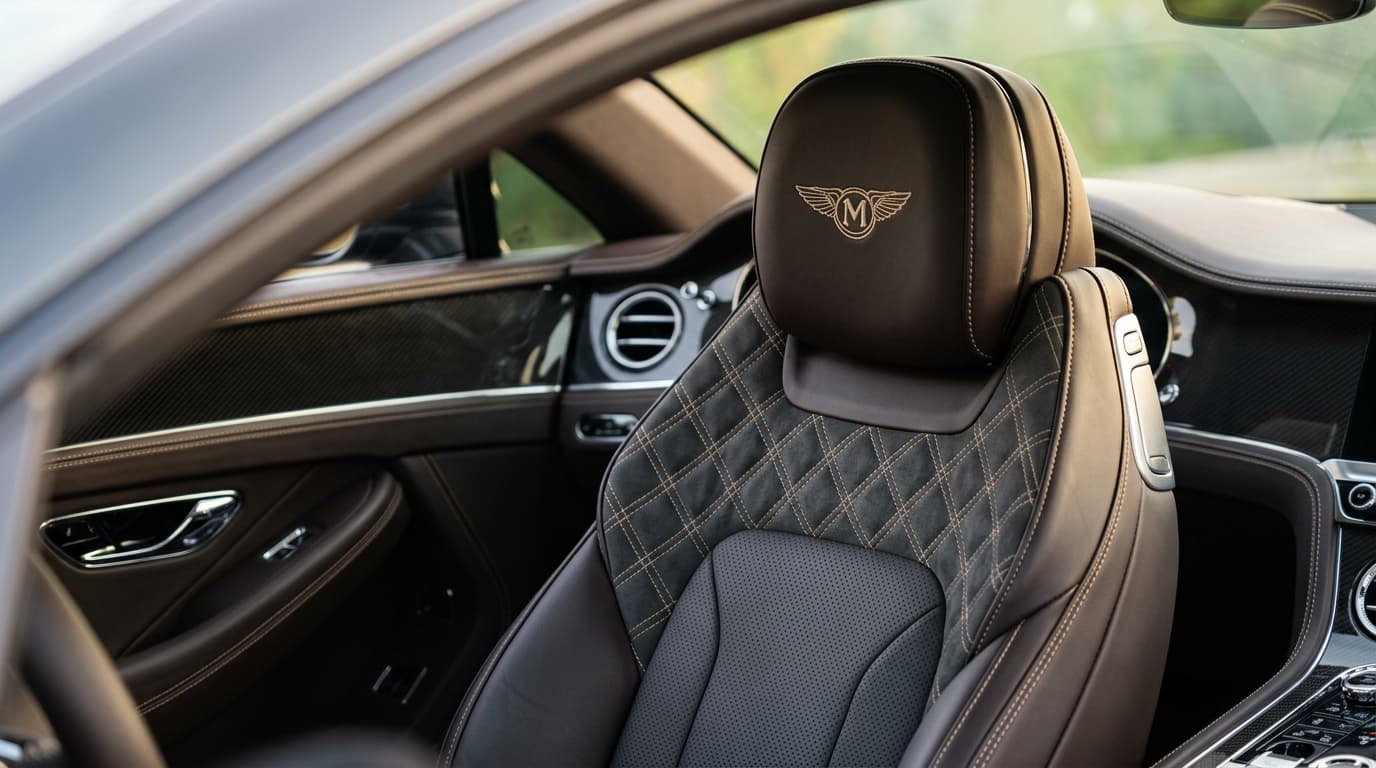 Illustrative image
Why it wears first
Every time you get in or out, your body passes over the outer bolster of the driver’s seat: it leans on it, drags across it and turns. No other part of the seat takes as much rubbing.
Seat makers allow for it. Recaro fits flat side bolsters to the short version of one of its seats to make getting in and out easier, and high, pronounced ones to the long version. And that is why bolsters are usually leather even when the centre is another material: Leather Naturally, the international leather industry body, explains that leather dominates there for its resistance to tearing and abrasion.
Three stages of wear
First the finish goes: the surface loses colour and sheen where it rubs, but the leather is still whole. Then come the cracks, as the hide dries out and flexes in the same place again and again. In the end, the leather splits or the seam gives way.
Each stage calls for a different repair, and it is worth knowing which one the seat has reached before asking for a quote.
The rubbing
Getting in and out, the body passes over the outer bolster.
The wear
First the colour, then the cracks, finally the split.
The new panel
Sewn in along its seams, without touching the rest.
When the colour is enough
If the leather is whole and only the finish has worn, the colour can be restored. Furniture Clinic, a UK supplier of leather restoration products, explains that high-contact areas such as a seat bolster need more preparation: cleaning the dirt out of the creases, removing the factory finish so the colour takes, then sealing it with a finishing lacquer.
To match the shade, the same supplier works from a sample of the leather, and advises ordering all the colour needed at once, because two batches can vary slightly.
When the panel has to go
If the leather is deeply cracked or split, colour won’t fix it: the bolster panel has to be replaced. A seat is made of panels sewn together, and the bolster panel can be unpicked, patterned and replaced with a new one without touching the rest.
The challenge is making it disappear. New leather next to leather that has spent years in the sun won’t necessarily share its shade or its feel. That is why the colour is decided on a sample, beside the seat — and why it sometimes makes more sense to retrim the whole seat, or both front seats.
Under the bolster is the filling that gives it its shape. If that has collapsed, a new panel over it wouldn’t last, so it is checked at the same time.
How to put it off
A Porsche dealer recommends a conditioner in its maintenance advice to stop leather drying out and cracking, and Leather UK, the British leather industry body, publishes its own care guidance. Neither prevents the rubbing, but cared-for leather lasts longer before it cracks.
What to ask before the repair
These questions make clear which repair is due:
- Stage
- Has only the colour worn, or is the leather cracked or split?
- Repair
- Restore the colour, or replace the panel?
- Shade
- Is it matched on a sample, next to the seat?
- Filling
- Is the bolster’s filling checked?
- Scope
- Is the single panel worth it, or the whole seat?
The service
A seat that needs attention?
Complete interiors in leather and Alcantara for sports and classic cars: seats, door cards, headlining and steering wheel. The service page explains how the work is done.
Sources
Bolster design comes from Recaro; the leather, from Leather Naturally, Leather UK and a Porsche dealer; restoring colour, from a supplier of restoration products. Each source was found by searching the publisher’s own site.