

Heated or ventilated seats: what changes when they’re retrimmed
A heated or ventilated seat isn’t just foam and leather. Beneath the cover sit a heating system, fans that blow through the leather and, on the passenger side, often a sensor that decides whether that airbag fires. Retrimming it changes the layer that sits on top of all that. Here is what the makers say, and what is worth asking first.
By Royal Stitch · Published
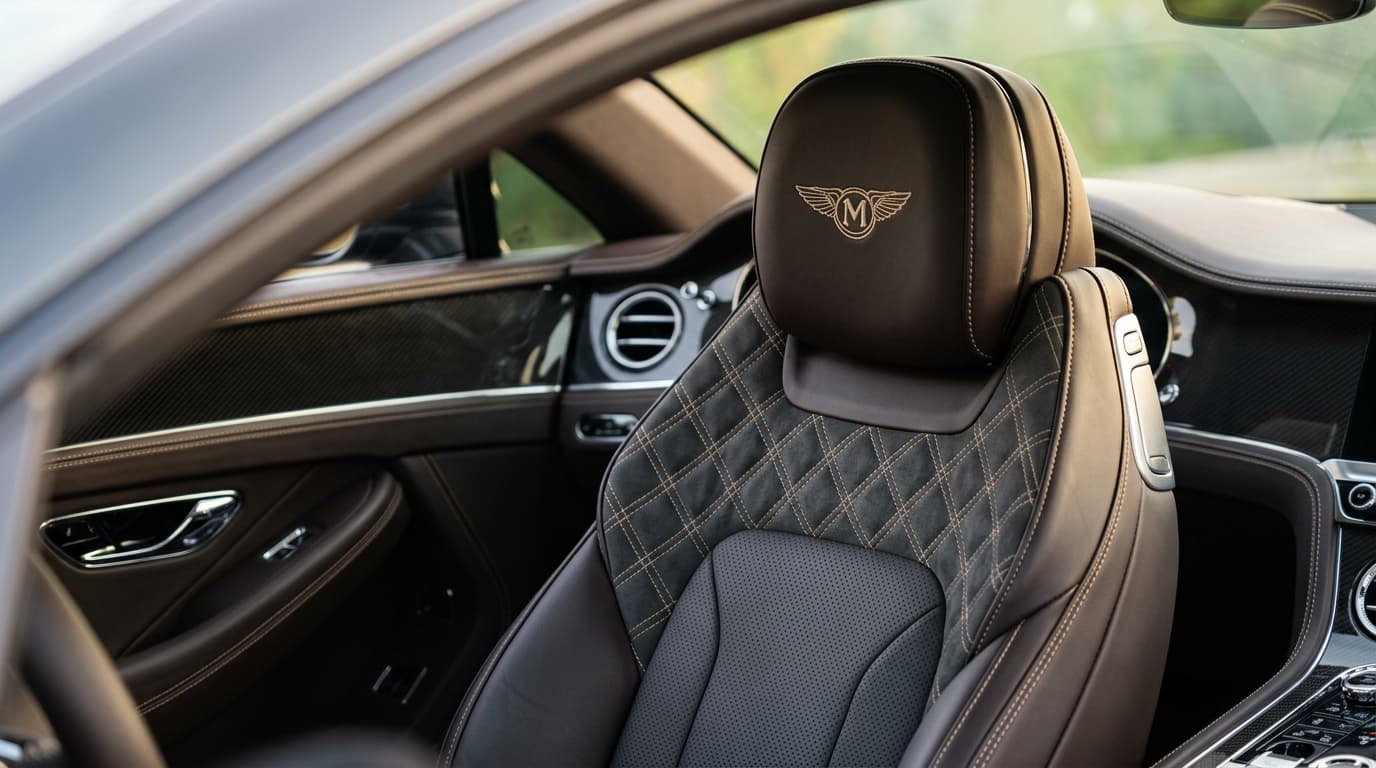 Illustrative image
What lies under the cover
Hyundai sets it out in its owner’s handbooks: ventilated seats cool by blowing air through small holes in the surface of the cushion and backrest. The heating sits under the trim too: Katzkin, an American firm that makes leather interiors to replace factory ones, fits its heating and cooling systems beneath the new leather.
These are layers that work through the cover. Whatever goes on top changes how the heat and the air reach you.
Heat
It sits under the trim; nothing insulating goes on top.
Air
It comes out through holes in the leather: unperforated, it can’t.
The sensor
On the passenger side, it weighs whoever sits down and decides whether to arm the airbag.
The leather has to let air through
The same Hyundai handbook warns that a spilled drink or a plastic bag can block the holes and stop the ventilation working properly. New leather is no different: if it isn’t perforated, the air can’t get out. Katzkin installs its heating and cooling only in perforated leather interiors, and recommends ordering the perforation from the outset.
For heating, Hyundai says not to put anything insulating on the seat — a blanket or a cushion — while it is on: the seat can overheat, cause burns or be damaged.
What the maker warns
Hyundai goes further: in the handbooks for several of its models it says not to change the seat cover, as doing so may damage the heating or ventilation. That is the car maker’s warning, and it is worth reading in the handbook for your particular model before deciding anything.
That doesn’t mean such a seat can’t be retrimmed — there are firms that do it — but that it is work done knowing what lies beneath and respecting it: the heating, the fans, their connections and the perforation.
The passenger seat weighs its occupant
In many cars, the passenger seat carries sensors that decide whether its airbag is armed. The US advanced airbag rule, published by NHTSA, the US road safety agency, lets the maker switch it off for a small child using weight sensors or other means. Nissan explains in a technical bulletin that those sensors measure only the weight actually resting on the cushion.
So working on that seat has consequences. Subaru, in a 2014 bulletin, requires its occupant detection system to be recalibrated whenever the passenger seat is removed, and states that this includes replacing the cover. Toyota asks for that calibration to be done with the seat empty and in position. Each make has its own procedure and, often, its own diagnostic tool.
What to ask before it’s retrimmed
With these answered, you know what has to be respected before any leather is cut:
- The seat
- Heated, ventilated or both? Does the passenger seat have an occupant sensor?
- The handbook
- What does the car maker say about changing the trim?
- The leather
- Is it perforated where the air needs to come through?
- Fitting
- Who removes the seat and reconnects everything?
- Calibration
- Does the passenger sensor need recalibrating? Who does it, and with which tool?
The service
Retrimming your car’s seats?
Complete interiors in leather and Alcantara for sports and classic cars, with material, colour and stitching agreed on a sample before anything is cut. The service page explains how the work is done.
Sources
The systems come from Hyundai’s handbooks and a maker of leather interiors; the sensor, from the US rule and from Nissan, Subaru and Toyota technical bulletins published by NHTSA. Each source was found by searching the publisher’s own site.
- Hyundai — owner’s manual, air ventilation seat
- Hyundai — owner’s manual, seat warmers and air ventilation seats
- Hyundai — owner’s manual, seat warmers
- Katzkin — DegreeZ heating and cooling
- Katzkin — FAQ, seat heating or cooling
- NHTSA — advanced air bags final rule, 2000
- Nissan — occupant classification system bulletin (PDF)
- Subaru — bulletin 07-84-14, sensor re-zeroing (PDF)
- Toyota — campaign G0J technical instructions (PDF)