Nappa leather versus standard leather: what actually differs
“Nappa” turns up in nearly every luxury car specification and in plenty of upholstery quotes. It sounds like a breed or a brand, and it is neither. Here is what the standard says, what really separates one leather from another — the grain and the finish — and what is worth asking before a car is retrimmed.
By Royal Stitch · Published
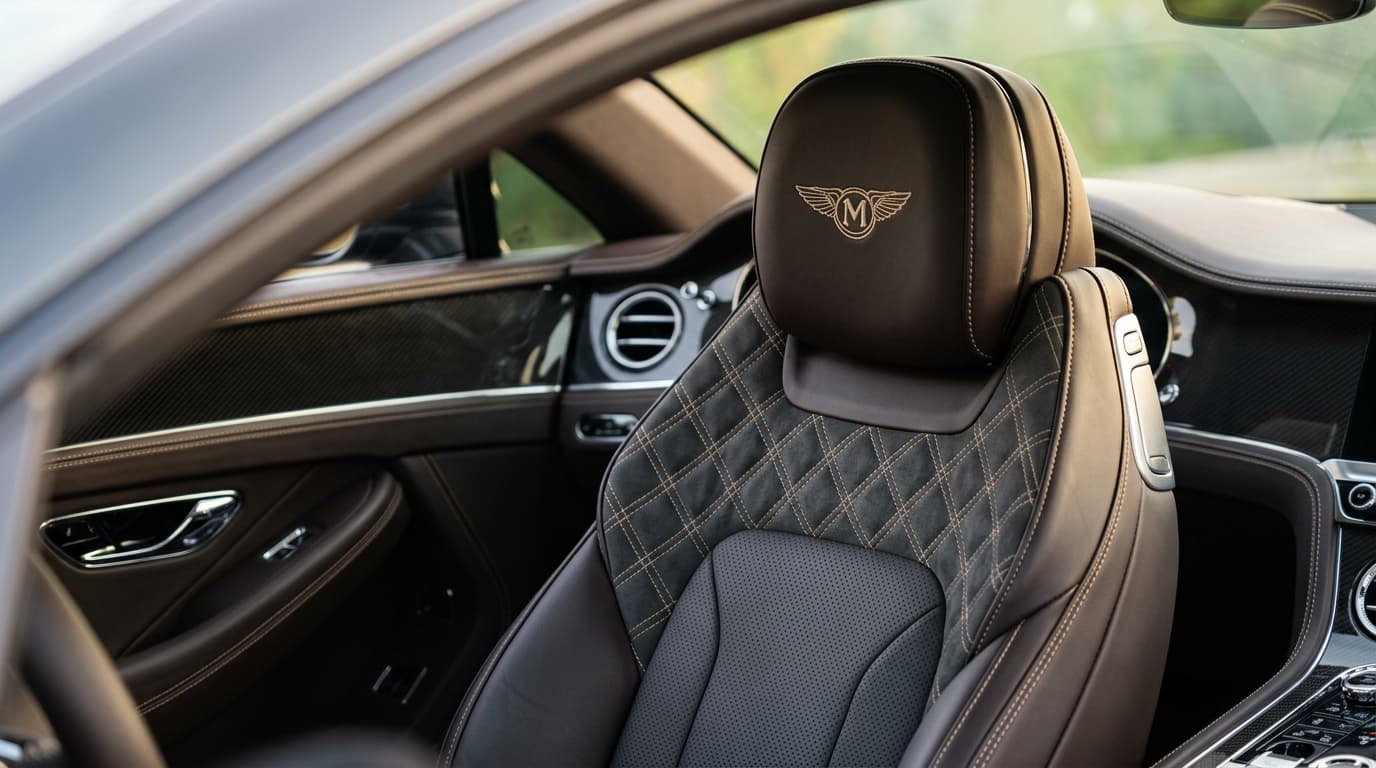 Illustrative image
What nappa is, according to the standard
ISO 15115, the international vocabulary for leather, has an entry for nappa: a soft, full-grain leather. The Leather Working Group, which brings tanneries and brands together, lists it in line with ISO and the UNECE definition: soft full-grain leather, dyed right through and lightly finished.
It is a vocabulary definition, not a trademark. In the market the word is used more loosely, so the useful question isn’t whether a leather is “nappa” but what lies behind the label: which grain, and which finish.
The name has a known origin. According to the Napa County Historical Society, Emanuel Manasse joined the Sawyer tannery in Napa, California, in the early 1870s and introduced new tanning methods there; the leather came to be known by the town’s name. It was sheepskin for gloves; today the word is also used for cowhide in upholstery and cars.
The grain: full or corrected
The grain is the outer layer of the hide, with the animal’s natural texture and pores. ISO 15115 separates two cases. Full-grain leather keeps all of its grain, with nothing removed mechanically. Corrected-grain leather has part of the grain buffed away and the surface rebuilt with a finish, often embossed with an artificial grain.
Beneath the grain is the split: when a hide is divided into layers, the inner part has no grain, and the European standard EN 15987 requires it to be named as such. Nappa, by definition, is full grain.
Full grain, dyed
The natural surface is kept and the dye goes right through — the pores still show.
Corrected grain, pigmented
The surface is buffed, coated with pigment and embossed with an even grain.
The finish: aniline, semi-aniline or pigmented
On top of the grain sits the finish — the other big difference. The Leather Working Group defines them like this:
- Aniline
- Coloured with dyes only, with no pigment coat. The natural grain shows, marks and all. Leather Naturally notes that it absorbs liquids more readily.
- Semi-aniline
- A small amount of very fine pigment evens the colour and hides minor marks without covering the grain entirely.
- Pigmented
- A pigment coat conceals the grain completely. It is the finish used on corrected-grain leather and, according to Leather Naturally, the easiest to clean.
In a car that lives in the sun
FIRA, the UK furniture industry’s technical body, sums up the trade-off: aniline is the most expensive and the most vulnerable to light and liquids; semi-aniline is tougher but still suffers from spills; pigmented is the most durable. And Leather Naturally reminds us that all leather fades under UV, so it is worth keeping out of direct sun.
Car makers choose to suit the car. Porsche describes its Club leather as a milled nappa with a natural look, and Bentley offers semi-aniline and nappa hides on its highest specifications. On the Costa del Sol, with a car parked in the sun for hours, the choice isn’t only about feel: it is about how much sun and use that leather will see.
What the law says
In Spain, Royal Decree 769/1984 governs the words “piel” and “cuero” (leather): a material that doesn’t qualify can’t use them, not even with “imitation” or “synthetic” alongside. COTANCE, the European tanners’ association, counts Spain among the countries that protect the term.
For car interiors there is also a specific standard, EN 16223-2, which sets how leather is designated and described in automotive use. And EN 15987 makes clear that bonded leather fibreboard is not leather. If a quotation says leather, it has to be leather.
Looking after it
Leather UK recommends cleaning with water and a mild soap — not detergent — and avoiding saddle soap, waxes and spray polishes. On aniline, an ink mark won’t come out: it has re-dyed the surface. For aniline, Leather Naturally adds a dry brush or a barely damp cloth, testing on a hidden area first and drying away from direct heat.
What to ask before a car is retrimmed
With these questions, two quotes that both say “nappa” can actually be compared:
- The grain
- Full grain or corrected?
- The finish
- Aniline, semi-aniline or pigmented? How will it cope with sun and daily use?
- The batch
- Does the whole cabin come from the same hides, so there are no two shades?
- The sample
- Can you see and handle it before cutting, with the colour and the stitching?
- The care
- How is this particular leather cleaned, and what should never touch it?
The service
Retrimming your car in leather?
Complete interiors in leather and Alcantara for sports and classic cars, with material, colour and stitching agreed on a sample before anything is cut. The service page explains how the work is done.
Sources
Definitions come from the leather vocabulary standards and industry bodies; what each maker says comes from its own pages. Sources were found by searching each publisher’s own site.
- ISO 15115:2019, leather vocabulary (preview)
- Leather Working Group — list of definitions (PDF)
- Leather Working Group — essential leather industry terms
- Napa County Historical Society — Sawyer Tannery
- EN 15987:2022, leather terminology (record)
- Leather Naturally — guide to leather terminology (PDF)
- FIRA — leather types, characteristics and maintenance
- Leather Naturally — how to care for leather (PDF)
- Porsche — 911 interior and Club leather
- Bentley — extraordinary materials
- BOE — Royal Decree 769/1984 (in Spanish)
- COTANCE — protecting the term leather in Europe
- BSI — EN 16223-2, leather in automotive interiors
- Leather UK — care instructions