

Why a car headliner sags, and how it is redone
A sagging headliner always starts the same way: a bulge over the rear seats or by the windscreen that grows a little more every summer. The cloth isn’t torn; what has failed is what lies behind it. Why it happens, why a quick fix doesn’t last, and what redoing it properly involves.
By Royal Stitch · Published
 Illustrative image
How a headliner is made
A car’s headliner isn’t cloth glued to the roof panel. It is a rigid board moulded to the shape of the roof, covered in a cloth with a thin layer of foam on the back. Sailrite, a supplier of upholstery materials, sells these headliner fabrics with the foam already bonded on by flame lamination.
The foam gives the soft feel and hides any unevenness in the board. It is also the weakest part of the whole.
Why it sags
With age and heat, that foam breaks down: it turns to powder between the cloth and the board, and the cloth, which was bonded to the foam, is left with nothing to hold on to. Repair guides in the motoring press agree that heat, humidity and time are what degrade it.
And on the coast there is no shortage of heat. In a test by RACC with the Swiss motoring club TCS, a car shut in the sun heated up inside well beyond the outside temperature within an hour. RACE warns that leather, plastics and interior trim get hotter still than the air. The headliner sits right under the roof panel.
Board
The rigid part moulded to the shape of the roof.
Foam
The thin layer bonding cloth to board — and the part that fails.
Cloth
What you see; it drops when the foam crumbles.
Why the quick fix doesn’t last
There are quick fixes: spraying adhesive behind the cloth, or holding it up with twist pins. They can last a while if the foam is still intact. If it has crumbled, the glue grips dust rather than foam, and the cloth comes down again.
The repair guides themselves draw the line: with sound foam, re-bonding is enough; with crumbled foam, it has to be replaced. And first of all, rule out a leak: if water gets in around the windscreen, the sunroof or the aerial, a new headliner will come down just the same.
What redoing it properly involves
The board comes out. To remove it, everything fixed to it has to come off first: interior lights, sun visors, grab handles and, if there is one, the sunroof surround. The old cloth is stripped and the board cleaned of foam residue right back to the substrate, because any leftover would show through the new cloth.
It is then covered in new cloth that already carries its foam, bonded with a headliner adhesive, and everything goes back in. Manufacturers sell adhesives made specifically for car headliners and market them on their heat resistance — Permatex’s, for one.
The cloth: original or otherwise
With the board bare is when the material is decided: the original cloth, another colour or another finish. In a classic being restored for originality, the usual aim is the closest match to the factory cloth; in a sports car, the headliner can match the rest of the cabin.
What to ask before you leave the car
These questions separate a repair that lasts from one that comes down again:
- Method
- Does the board come out, or is the cloth glued from inside the car?
- Cleaning
- Is every trace of the old foam removed?
- Cloth
- Which cloth, and does it come with its foam?
- Adhesive
- Is it a headliner adhesive, made for the heat?
- What comes off
- Lights, visors, handles, sunroof surround? Does it all go back as it was?
The service
A headliner that keeps coming down?
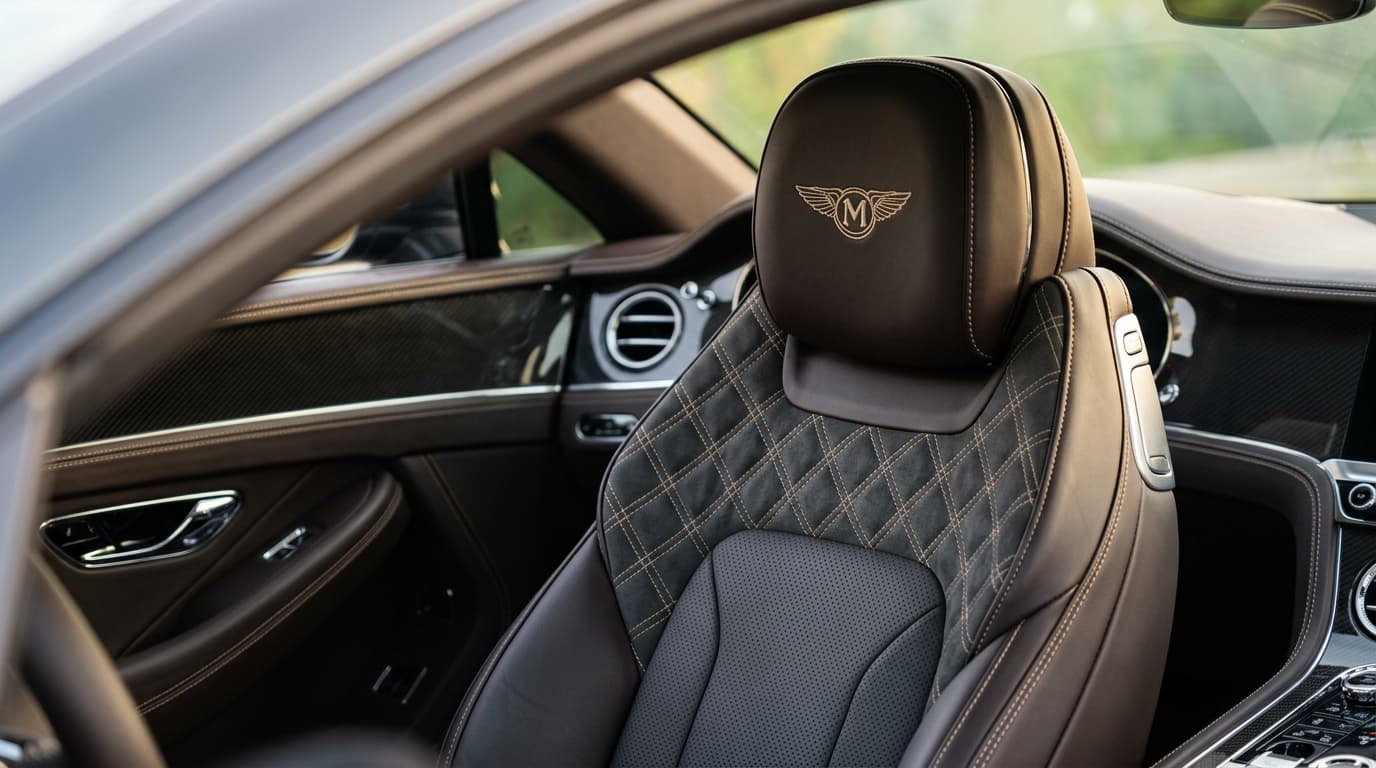
Complete interiors in leather and Alcantara for sports and classic cars: seats, door cards, headlining and steering wheel. The service page explains how the work is done.
Sources
The heat comes from RACC and RACE, two Spanish motoring clubs; the cloth and adhesive, from a supplier and a manufacturer; the fault itself, from repair guides in the motoring press. Each source was found by searching the publisher’s own site.
- RACC — the effect of sunshine on a car’s interior temperature (PDF, in Spanish)
- RACE — cars and heat (in Spanish)
- Sailrite — foam-backed headliner
- Sailrite — installing a foam-backed headliner (video)
- Permatex — headliner adhesive
- Jalopnik — the sagging headliner and the quick fix
- Midwest Fabrics — why headliners sag
- dubizzle — water as a cause of a sagging headliner