Chrome-free leather in cars: what it is and why makers choose it
Before car leather becomes a seat, it is tanned, and not all of it is tanned the same way. Most is chrome-tanned; some makers ask for theirs chrome-free. How each is tanned, why the motor industry pushed chrome-free tanning, what EU law says, and what to ask before retrimming.
By Royal Stitch · Published
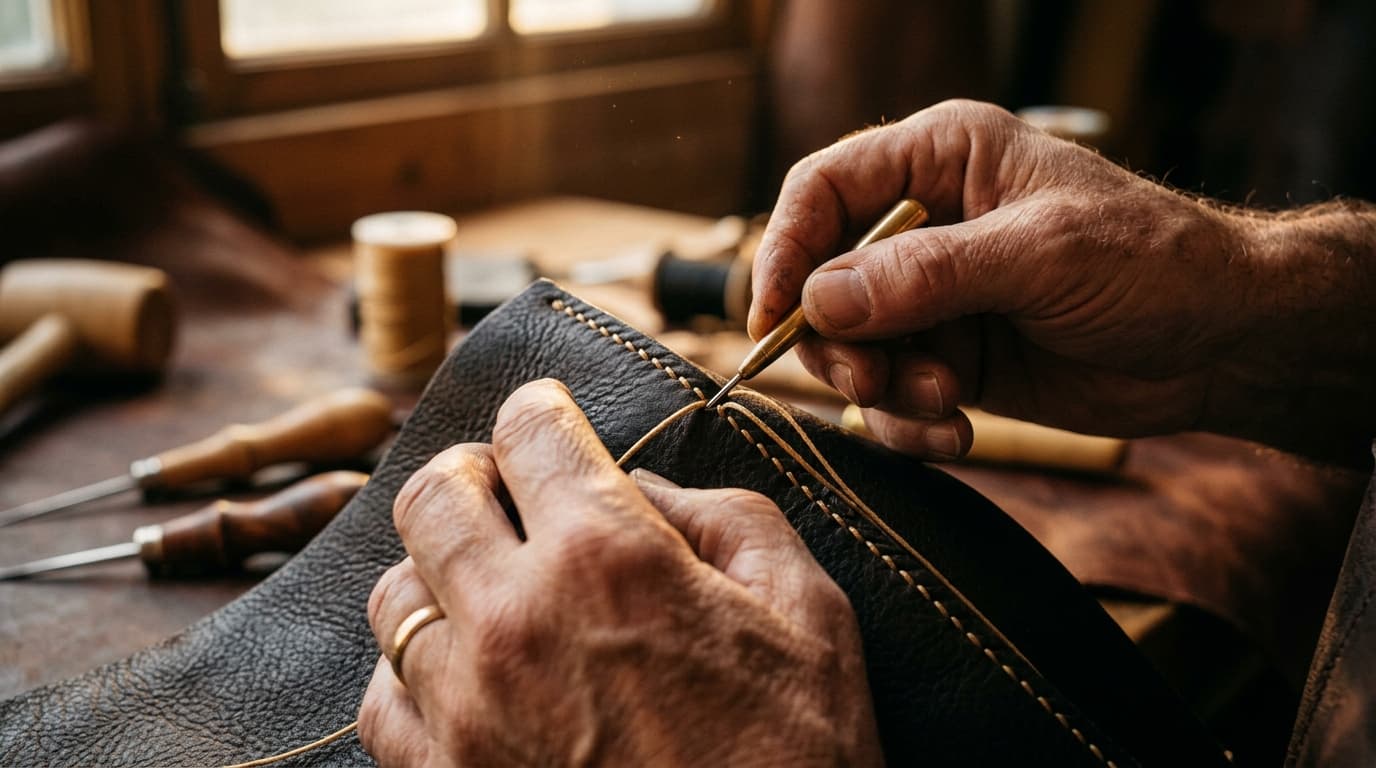 Illustrative image
Three ways to tan a hide
Tanning is what turns a hide into leather that won’t rot. Leather Naturally, the leather industry’s own initiative, sets out three main routes in its fact sheets.
- Chrome
- With chromium salts. The hide comes out a greyish blue, which is why the trade calls it wet-blue. According to the same source, around three in four hides are tanned this way today.
- Vegetable
- With plant tannins. It gives shades from tan to brown and takes on a patina over the years.
- Chrome-free
- With other agents, such as zirconium or aluminium salts, aldehydes or synthetic tannins. The hide comes out off-white, hence the name wet-white.
Chrome
It comes out greyish blue: wet-blue, in the trade.
Vegetable
Plant tannins: from tan to brown.
Chrome-free
It comes out off-white: wet-white, in the trade.
Why cars
In 2009 Volvo announced that all the leather in its interiors would be tanned without chromium, using natural or synthetic agents. It gave two reasons, people with chrome allergies and the lower environmental impact of the tanning, and its later press material still describes its leather as chrome-free tanned. The industry has taken the question seriously: SAE, the international society of automotive engineers, has published research on metal-free automotive leather.
What the law says
Two pieces of EU law bear on this, and both deal with chromium VI, not the chromium used in tanning. Regulation 301/2014 added a restriction to Annex XVII of REACH: leather articles that come into contact with the skin may not be placed on the market if their leather contains chromium VI at 3 milligrams per kilo or more. That limit is the lowest the test method, EN ISO 17075, can detect.
For cars, Directive 2000/53/EC, the end-of-life vehicles directive, has banned hexavalent chromium in vehicle materials and components since 1 July 2003, apart from the exemptions in its Annex II.
When retrimming
Replacement leather needn’t be tanned the same way as the original, but it is worth knowing. If the car left the factory with chrome-free leather, as Volvos do, or if someone who rides in it is allergic to chrome, it is something to ask the leather supplier before choosing, just like the colour, thickness or finish.
What to ask before choosing the leather
With these answered, you know what you are asking for:
- The tannage
- Chrome, vegetable or chrome-free?
- The original
- How was the leather the car left the factory with tanned?
- The colour
- Which tannage does the supplier recommend for the chosen colour?
- Paperwork
- Does the supplier certify that it meets the REACH chromium VI limit?
- Who rides in it
- Is anyone allergic to chrome?
The service
Retrimming your car in leather?
Complete interiors in leather and Alcantara for sports and classic cars, with material, colour and stitching agreed on a sample before anything is cut. The service page explains how the work is done.
Sources
The tannages come from Leather Naturally; Volvo, from its press material; the law, from the text of Regulation 301/2014 and Directive 2000/53/EC. Each source was found by searching the publisher’s own site.
- Leather Naturally — summary of the different types of tanning
- Leather Naturally — types of tanning fact sheet, March 2026 (PDF)
- Volvo Cars — chrome-free leather in its interiors (2009)
- SAE — paper 2010-01-0683, metal-free automotive leather
- EUR-Lex — Regulation (EU) 301/2014, chromium VI in leather articles
- Directive 2000/53/EC, end-of-life vehicles, Article 4